


The U.S. Economy Continues to Demonstrate Remarkable Resilience Through a Decade of Disruption
Despite pandemic shocks, energy price spikes, and trade uncertainty, the U.S. has maintained globally enviable growth — a foundation that supports long-term confidence in real assets.
The U.S. economy has absorbed a decade of disruption without breaking. Advisory San Diego explores what that resilience means for long-term confidence in coastal San Diego real estate.


The U.S. economy has absorbed an extraordinary series of shocks over the past six years — the pandemic, energy price surges tied to global conflicts, significant tariff uncertainty — while still maintaining growth that rivals any major economy in the world. Analysts have described the American economic system as impressively flexible, capable of absorbing disruptions that would have destabilized less adaptive markets. The observation underscores a structural quality that has repeatedly been underestimated by forecasters. For property owners and long-term investors, this durability is not incidental. It is foundational.
What makes this pattern worth examining closely is not simply that the U.S. survived these disruptions — it is the manner in which it did. Each stress event carried genuine potential for cascading damage. A global pandemic that shuttered supply chains and labor markets. Energy price shocks amplified by geopolitical conflict. Trade policy uncertainty that introduced friction into global commerce at a scale not seen in decades. In prior eras, any one of these forces would have been sufficient to trigger a prolonged contraction. The fact that they arrived in compressed succession and did not produce that outcome says something meaningful about the underlying architecture of the American economy.
The resilience narrative is supported by a broader pattern: the U.S. avoided the deep recessions that many forecasters predicted during each of these stress events. Consumer spending, employment, and housing values held more steadily than historical models would have suggested. This is not a matter of luck. It reflects both the diversity of the U.S. economy and its capacity to reallocate capital and labor with relative speed. When one sector contracts, others expand. When one region slows, another absorbs displaced activity. That structural flexibility is what separates the U.S. from economies that depend more heavily on a single industry, a single trading partner, or a single monetary lever.
For real estate specifically, this adaptability has had direct consequences. Even in periods of elevated borrowing costs, demand for property in supply-constrained markets has remained structurally supported. The reason is straightforward: when the broader economic system proves capable of sustaining employment and household wealth through disruption, the appetite for real assets does not evaporate — it defers and then returns. Coastal California has witnessed this cycle repeatedly. Uncertainty compresses transaction volume. It does not, in supply-limited markets, compress long-term value in any durable way.
This distinction matters for how sophisticated buyers and owners interpret market conditions. The impulse during periods of economic uncertainty is often to treat hesitation as prudence. Sometimes it is. But in markets defined by structural undersupply and persistent demand — Del Mar, La Jolla, Rancho Santa Fe, Coronado, Encinitas — prolonged hesitation carries its own cost. The buyers who stepped back during periods of peak uncertainty in prior cycles frequently found themselves re-entering at higher price points once clarity returned. The economy's demonstrated capacity to recover did not wait for their confidence to rebuild.
The broader context here is worth stating plainly. The U.S. is not an economy without vulnerabilities. Inflation, interest rate policy, fiscal pressures, and geopolitical exposure remain live variables. But the record of the past decade — specifically the decade defined by the shocks described above — has produced evidence of a system that bends without breaking. That record deserves weight. For long-term investors in real property, the question has never been whether disruption will occur. It will. The question is whether the underlying economy has the capacity to absorb it and continue generating wealth. On that question, recent history offers a clear answer.
For coastal San Diego in particular, the economic backdrop matters in ways that are sometimes underappreciated. These markets are not insulated from macro forces, but they are supported by a durable combination of factors — constrained land supply, desirable climate, proximity to major employment centers, and the sustained preference of high-net-worth buyers for physical assets in locations that cannot be replicated. When the broader economy demonstrates resilience, it reinforces the case for the assets best positioned to hold and build value over time. Coastal California property is among them.
Real estate, especially in high-demand markets, continues to reflect the strength of an economy that has proven its adaptability across conditions that once seemed without precedent. Periods of uncertainty, when viewed through a longer lens, have consistently resolved into periods of renewed appreciation. That pattern is not guaranteed to repeat. Nothing in markets ever is. But understanding it gives buyers, sellers, and long-term holders a more honest framework than one built on short-term anxiety. Decisions made from knowledge rather than fear tend to be better ones — and the knowledge available right now, grounded in the economic record of the past decade, supports measured and informed confidence in real assets.
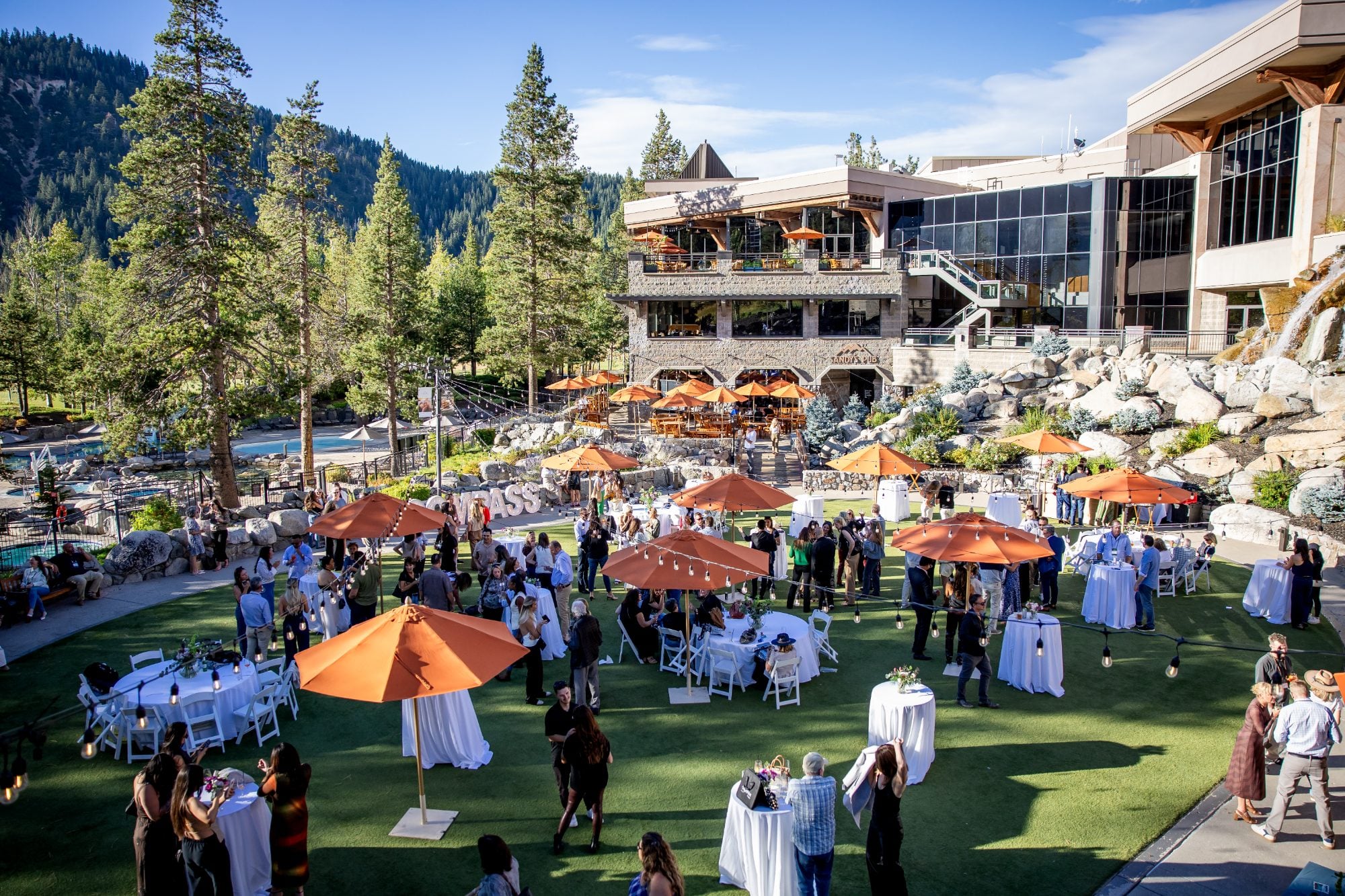
2026 Compass Lake Tahoe Economic Summit
Read the story ›


Stay informed.
The weekly market update and new listing alerts, delivered to your inbox.